
About Worming
Targeted worming for horses is essential for maintaining their health, preventing & treating parasites that can cause serious damage & illness if left untreated.
In order to reduce the likelihood of worms developing resistance to anthelmintics (wormers), the right product needs to be used on the right animal at the right time.
One way to determine whether a specific horse needs worming is to monitor presence of parasites, this is done by performing an FEC (Faecal Egg Count) a sample of the horse droppings can be sent to a laboratory or alternatively you can carry out your own FECs , please see our range of Parasitology Kits This is best done every 8-10 weeks during the grazing season, from spring until early autumn and an ELISA tapeworm test in Spring and Autumn, then dose the animal as necessary. Blood Tests for encysted redworm may also be carried out by your vet in the winter
Some degree of resistance has been reported for all classes of wormers available today, so it is important to use worming products only, when necessary, to avoid the problem becoming worse.
Resistance to wormers is a problem as there are few new wormers being developed
Please see CANTER Guidelines & Horse Parasite Risk Profiling Tool Below:
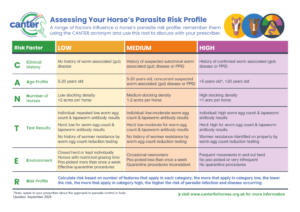
There are four classes of wormers are used in horses:
1. Benzimadazoles. They treat encysted small redworm larvae, large and small redworm and large roundworm. However, about 75% of small redworms are now resistant to benzimidazoles
2. Tetrahydropyrimidines This treats adult redworm, large redworm and a double dose will treat tapeworm. Resistance is less of a problem with this drug but is on the rise.
3. Macrocyclic Lactones (ML’s). Ivermectin treats redworm and roundworm and moxidectin treats encysted redworm larvae and roundworm.
4. Pyrazones. Praziquantel is a drug that specifically kills tapeworms.
Administration of wormers:
The most important factor in administering a wormer, is to know the weight of the animal and to dose according to weight. A weight tape can be used to calculate this.
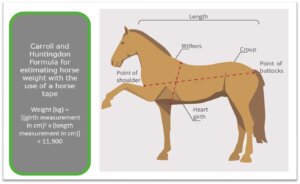
Wormers may be administered in the animals feed – it is helpful to give a small quantity of feed first to make sure it is all consumed. More commonly owners use worming pastes administered via an oral syringe like the one below.
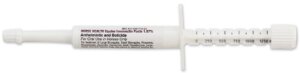
Firstly set the syringe at the correct weight of the horse. Standing at the side of the horse, open the animal’s mouth, then carefully place the syringe at the back of the horse’s tongue before pushing the plunger down to administer the worming past
Click Here To Explore Our Range of Equine Wormers
Please Contact Us for free advice by our in-house qualified Equine SQP

An SQP is a Suitably Qualified Person, a legally defined professional in the UK authorized to prescribe and supply specific veterinary medicines (POM-VPS and NFA-VPS) for pets, horses, and farm animals. They are also known as Registered Animal Medicines Advisors (RAMAs).
Qualified to advise on, prescribe, and supply certain animal medicines, such as wormers, flea treatments, and vaccines.
Registered with professional bodies and regulated by the Veterinary Medicines Directorate (VMD).