
Coccidiosis is an intestinal disease caused by single-celled coccidian parasites. Though there are several species of coccidian protozoa, all must get inside the cells lining the intestines of their host to reproduce.
Coccidians spread when their eggs (oocysts) shed with their host’s faeces contaminating the food of other potential hosts. Mainly associated with poultry, infected birds suffer enteritis with blood stained diarrhoea, becoming lethargic, anaemic and showing a generally degraded condition.
Distinguishing between coccidiosis and similar symptoms
Poultry coccidians don’t infect farm mammals, nor do the cow and sheep equivalents infect chickens and waterfowl. In birds, veterinary microscopy of tissue from the characteristically swollen intestines of confirms coccidian infection. In sheep and cows, distinguishing between coccidiosis and similar symptoms of colibacilliosis, cryptospiridiosis, coronovirus, rotavirus and bovine viral diarrhoea (BVD) can require further veterinary laboratory investigation.
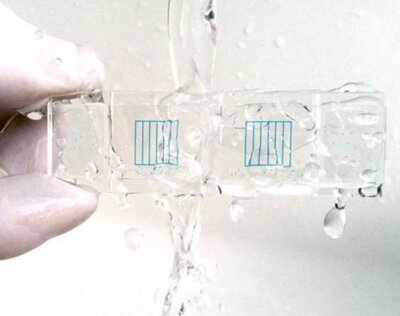
Veterinary diagnostic kits equip busy vets with a fast and reliable answer to the question of which parasite is responsible for the observed symptoms. Vetlab’s FASTest kits provide accurate, early diagnosis even in the field allowing treatment and preventative measures to begin immediately.
Using histological staining techniques
Where coccidiosis is indicated, faecal oocyst counts can give an estimate of the level of infection. Faecal egg count flotation solutions, Ovatube detection kits and smooth, quiet veterinary centrifuges make oocyst recovery quick and clean. Veterinary microscopes and histological staining techniques support the quantitation and identification of particular coccidian species.
In recent years, histological and egg count surveys have estimated the coccidian infection rate of cattle to be about 20%. However, not all species of coccidians cause disease, and a heavy oocyte burden doesn’t always indicate a clinically significant infection.
The risk is especially high where many animals are confined
Sever coccidiosis in calves and lambs can result in life-threatening dehydration. Infection usually follows from ingestion of oocyte-infected faeces or contaminated food. The risk is especially high where many animals are confined in faeces-soiled enclosures or where young animals are grazed on land contaminated by material from hosting adults.
The exception to coccidian species specificity is Toxoplasma gondii. T.gondii reaches maturity and reproduces only in cats, where it causes more serious symptoms. Toxoplasmosis only rarely causes illness in humans and generally only in immunologically weakened dogs.
T.gondii oocysts in faeces from roaming cats can initiate abortion or foetal reabsorption in sheep. The veterinary response to this commercial risk includes vaccination, husbandry and animal-health expertise with quick detection and diagnosis with the FASTest Toxoplasmosis g diagnostic kit.
To find out more about our large range of veterinary diagnostic test kits visit our website: www.vetlabsupplies.co.uk or Telephone: 01798 874567
